Precast or prefabricated? Understanding the difference between these two structural concrete systems
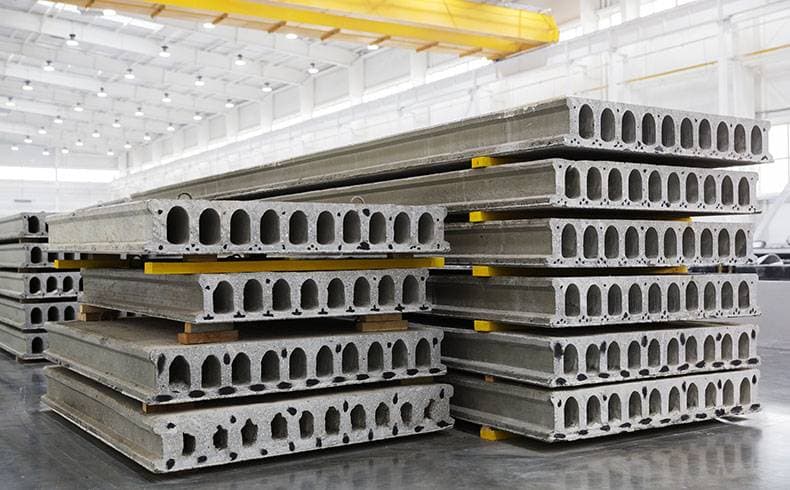
Although often used as synonyms, the terms precast and prefabricated represent distinct methods within civil engineering.
In modular construction, which is based on assembling standardized components to form buildings, it is common to use concrete elements such as beams, columns, slabs and walls produced away from the final construction site. These elements can be classified as precast or prefabricated.
These construction solutions have been gaining ground in projects of various scales, especially because they offer important advantages such as reduced waste on site, greater agility in carrying out the work, improvements in safety processes and technical performance, as well as the possibility of optimizing costs and resources.
What characterizes precast concrete
Precast concrete elements are produced by molding concrete in reusable forms, with production carried out in controlled environments that can even be set up on the construction site itself. This flexibility allows fabrication to take place in parallel with other construction activities, which helps speed up the schedule.
Inspection of the pieces is usually carried out by the construction company's own team, and production follows technical standards such as ABNT NBR 14.931/2004, which addresses the execution of concrete structures, and ABNT NBR 12.655/2015, which provides guidance on the preparation, control and acceptance of Portland cement concrete.
The demanding standards of prefabricated elements
In the case of prefabricated concrete structures, the process is conducted in industrial environments equipped with laboratories, specialized professionals and rigorous quality control systems. Each stage of production is recorded, including information such as the date of manufacture, the types of materials used and the technical personnel responsible.
According to standard ABNT NBR 9.062/2017, these elements are defined as components produced in plants or locations with equivalent structure, capable of ensuring total control over the quality of the manufactured products, with audits and inspections carried out by external agents appointed by the project owner.
Main differences between the two systems
The main distinction between precast and prefabricated lies in the level of technical control involved in the production process. Prefabricated elements, being manufactured in industrial facilities, undergo more rigorous procedures and offer greater traceability of their quality. Precast elements, although also molded in advance, can be made in improvised environments, with lower requirements for certifications and laboratory testing.
This technical difference directly influences the applications: while precast elements are more common in smaller projects, such as homes and small buildings, prefabricated elements are intended for large developments, such as logistics centers, industrial facilities and corporate buildings. The choice between one and the other will depend on factors such as the available budget, the execution timeline and the technical requirements of each project.
Regardless of the system adopted, both solutions represent important advances for civil construction, by enabling greater rationalization of processes and contributing to the productivity, safety and sustainability of projects.