Concrete strength control: what it is and how to apply the maturity method
Concrete strength is one of the most critical parameters when releasing structures. The traditional control method requires test specimens and laboratory tests, which can take days.
But with the maturity method, it is possible to estimate strength in real time, using sensors and mathematical models, speeding up schedules safely.
What is the maturity method?
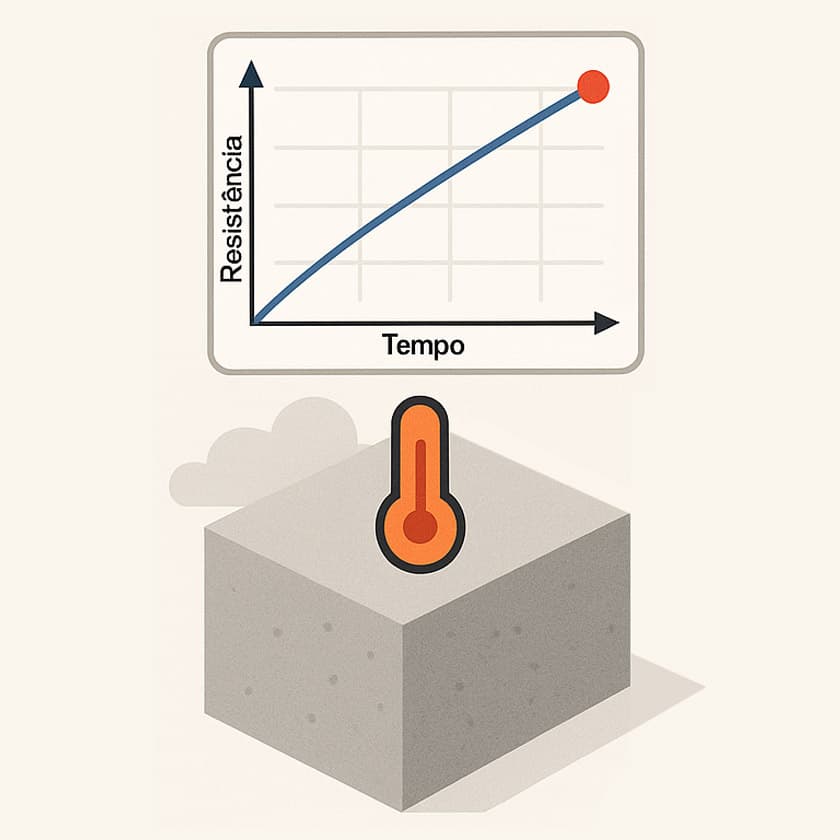
It is a technique that relates the time and temperature of the concrete to predict its strength throughout curing. With sensors inserted into the mass, data is collected continuously and processed in a system that estimates the evolution of strength.
Advantages over the traditional method
- Eliminates destructive testing on test specimens.
- Real-time results, with no need to wait 7 or 28 days.
- Greater control over curing, especially in extreme climates.
- Faster decision-making for formwork removal, pre-loading, or structure release.
When to apply it?
- On critical structures that require fast and safe release.
- On projects with tight deadlines, such as urban infrastructure.
- In environments with sharp thermal variation.
The maturity method brings precision, time savings, and greater reliability to the technological control of concrete. In a market that increasingly demands speed without giving up quality, this technology proves indispensable and can be integrated with solutions such as Kmix and other automation tools.
Want to ensure perfect concrete for the maturity method?
Talk to Kartrak and chat with one of our specialists to automate and improve the quality of your plant's production.